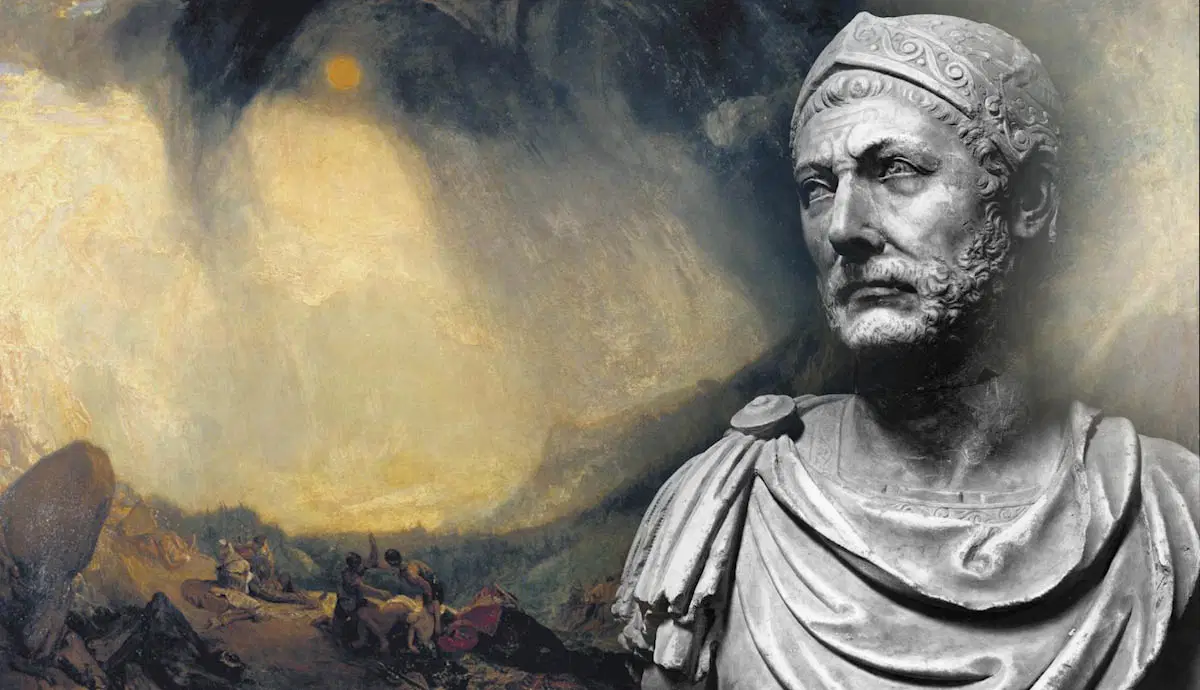
Part 7 of 12 – The Fallout from Cannae: Rome on its Knees (216 BC)

Gloom and despair engulf Rome. The aftermath of Cannae plunges the Roman Republic into a miserable orifice of hopelessness as the Republic enters its darkest hour. Hannibal thinks Rome is done. The world thinks Rome is done in fact. Romans everywhere panic. They struggle to grasp the notion that such a magnificent force could be wiped out in a single day. Throughout the Republic bereft families weep and agonize over the death of loved ones. A significant percentage of the population were either related to, or knew someone felled by Hannibal’s men.
The city of Rome braces for the inevitable onslaught of the invaders. They shore up their defenses and frantically send out riders begging for contingent forces to reinforce the Capital. The city’s residents believe Hannibal will now issue the final killing stroke. But the cities elected officials will not bow out with a whimper.
The Ruling factions reign in the pandemonium and silence the hysteria. They cancel religious ceremonies, and holidays. Roman soldiers are ordered to guard the entry ways to stop people from abandoning the city. More guards man the upper walls to prevent aggrieved women from taking their lives by plummeting to the ground. In a desperate ploy to curry favor with the Gods, Rome burns a randomly selected man and woman alive as a sacrifice.
Hannibal’s greatest victory echos across the Italian Peninsula and Rome’s stranglehold on the country weakens. Even its most loyal allies begin to waver. The Hannibal disease has latched itself to the Roman body for 2.5 years and there seems to be no antidote.
Hannibal’s Day of Judgement
Hannibal stares in the direction of Rome. The great question stands before him. Should he and his men seize upon this historic opportunity and assault the city? The heart of the Republic has never been more vulnerable. Eventually, the Carthaginian weighs his options and arrives at a decision. And it’s a decision that will baffle historians even to the present day.
Hannibal chooses not to march on Rome.
The General has scorched his way through Italy and he’s eviscerated with relative ease every enemy force sent to meet him. He’s just inflicted one of the most lopsided and deadliest defeats in history. So why does Hannibal decide at seemingly the most opportune time to not finish the job?
One factor to consider is Hannibal’s own losses at Cannae which were significant. Successfully encircling the mass body of Romans came at the cost of somewhere between 6 to 8 thousand of his men. The sum pales to number of Romans killed but Hannibal’s army only numbered around 45,000. So his greatest victory also in turn leveled 15% of his own army. Stranded in enemy territory Hannibal can’t replace his dead.
It’s also possible that Hannibal felt he lacked the ample troops and siege weaponry needed to scale Rome although this reasoning is disputed by historians. It’s plausible too that Hannibal’s intention was never to vanquish Rome but to win enough battles and drag the Romans to the negotiating table. After the Cannae catastrophe Hannibal may have wanted to hear from the Romans first before launching an attack on the Capital. Most nations at this time would have given up the war effort after taking such a drubbing.
Plus as Adrian Goldsworthy noted, gifted generals around this time abhorred siege warfare. They require tremendous resources, men, and most importantly time. The besieger must concentrate the army in one location for months, even years. That can destroy momentum and Hannibal’s style of war depends on fluid motion, movement, and speed. Hannibal’s strength is to lure his enemy to open terrain. Plus, as is sometimes easy to forget, taking cities can be especially challenging. The advantage always lies with the defenders even when seriously outnumbered.
But that Hannibal never pushed an assault on Rome has made fans of this incredible tale question if that decision was his fatal error. Unfortunately we will never know because there are no surviving historical accounts of Hannibal while he lived. Most of our sources stem from Livy and Polybuis who wrote about Hannibal’s exploits about a century after his death. So we will never be privy to the inner workings of the great General’s mind.
Hannibal’s decision foments a turning point in the war, unbeknownst to him. Perhaps some of his more prescient subordinates glimpses this as one of his generals makes a quip for the ages, “Hannibal, you can win a battle, but you don’t know how to win a war.”
Carthage Receives the Barcas with Great Tidings

Mago, Hannibal’s youngest brother returns to Carthage and regales the staggering achievements of his older brother to the Carthaginian Senate. He tells lavish tales of Hannibal’s journey over the Alps, the victory at Cannae, and the impending collapse of the Roman Republic. Excitement and hoopla echo through the Senate hall.
But the good news doesn’t end there. For Mago reveals that shortly after the battle of Cannae one of Romes more powerful allied cities Capua falls to Hannibal. The very city where a gladiator named Spartacus will launch his famous slave rebellion in little more than a century. The fall of Capua strikes a heavy blow to Rome. The multi-cultural city’s Senate believes Hannibal will become the ruling power in Italy as Rome’s demise appears all but certain. It’s a tremendous momentum surge for Hannibal
Carthage is ecstatic. The Senate graces Mago and reinforces Hannibal with thousands more Numidian horsemen, silver, and war elephants. Mago supposedly ended his tidings by saying, “what great gifts are these the Gods have awarded to Carthage.”
Hannibal and Rome’s Resolve
“After he was done with me he threw me out of his house to die. I resolved to live, to spite him.”
- Lord Varys, Game of Thrones
In the days following Cannae and the fall of Capua, Hannibal waits for word of Roman surrender. But this time it’s Hannibal who learns a lesson from his enemy. As aforementioned, any nation with an ounce of common sense would wave the white flag and declare a truce with Hannibal. But Rome is not any other nation. Its soul is comprised of sterner stuff.
Hannibal sends envoys to Rome where they offer to return the surviving prisoners of war for a price. The Romans rebuke Hannibal’s offer, shaking their heads in defiance. They won’t negotiate with Carthage in any form, even at the expense of releasing captured sons back to their families. Rome sends his envoys back with a message for Hannibal. Rome will not yield. Hannibal must destroy them all or for they intend to carry on the struggle to the bitter end.
In a way the Battle of Cannae hands Hannibal his first true defeat. Frustrated by this response and perhaps disappointed Carthage never showed such resolve during the First Punic War, Hannibal shifts his strategy. He orders his army to the Southern regions of Italy to secure more allies there. As he puts his efforts in motion Rome begins to revise its own plan to win this war.
Continued in Part 8…
Timeline
216 BC – Hannibal ignores Rome and marches South, Mago visits Carthage, Capua falls to Hannibal, Rome refuses to surrender
If you want to learn more about Hannibal Barca and the 2nd Punic War then please read The Ghosts of Cannae: Hannibal and the Darkest Hour of the Roman Republic by Robert L. O’Connell
Want more history? Check out my other blog posts right here!
Wow! This is great stuff! I guess we’ll never know exactly Hannibal chose not to invade the city of Rome, but you posit some interesting theories.
I was shocked to hear that ancient Rome made human sacrifices to their gods.
Comments are closed.