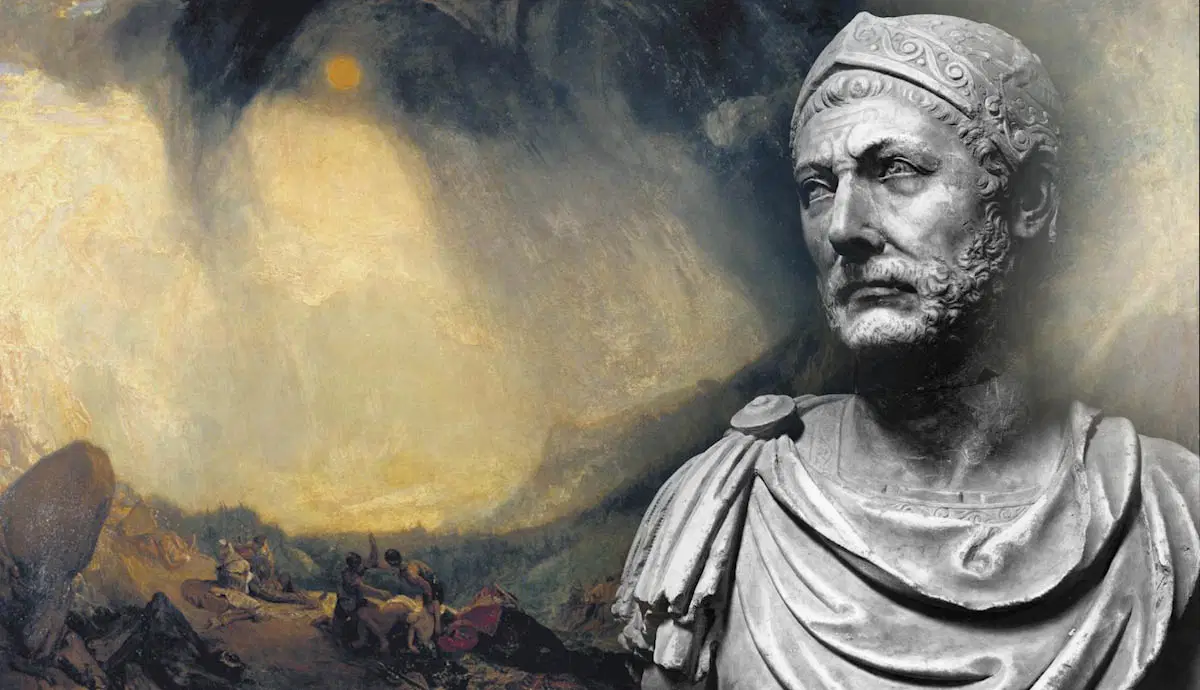
Part 4 of 12 – Hannibal and Rome Collide
Hannibal and Rome meet for the first time in Roman territory. The Romans raise a significant army and they appoint Publius Scipio to lead the charge and vanquish the invaders. This force marches north to the Po valley post haste. They’re aiming to pin Hannibal against the Alps from which he just descended. They know the Carthaginians are tired so they hope to catch them fast before they recuperate their strength.
Hannibal is aware of the army thundering toward him. But he has no intention of letting Scipio take the offensive. Hannibal decides that he’ll swing first. So he prepares his men for their first taste of battle in a war that will last 16 years.
Hannibal and Rome Face Off For the First Time

Hannibal uses the little time he has to sway neighboring tribes in Northern Italy (also known as Cisalpine Gaul) to ally with him. Those Italians need little convincing to ward off the crushing weight of the Roman thumb. They’ll latch onto any opportunity to supplant the Roman Republic.
The attempt to turn Rome’s colonies against her is part of Hannibal’s strategy. Hannibal knows his army isn’t big enough yet to threaten a city as large and fortified as Rome itself. But he does know that North and South Italy only recently became Roman (against their will) and will revolt with enough incentive. Hannibal’s assertion proves to be correct and it showcases his strength in diplomacy, not just combat.
Hannibal also knows that without these alliances he looses the numbers game to Rome. The Republic can draw upon its large population and produce armies en masse. Hannibal can’t just win battles. He must destroy the Roman war machine. Something he believes he can do If he consolidates all of Italy’s non-Roman citizens against her. He can then encircle the Capital and put it under siege. He convinces these neighboring tribes that he’s mightier than Rome and promises to grant them full autonomy if they win the war.
With his plan in motion, Hannibal ventures deeper into the Po valley and right into battle.
The Battle of Ticinus (November 218 BC)

Hannibal races to meet the Romans along the river Ticinus. Scipio is a seasoned general who understands the sheer talent of his opponent. Scipio does not underestimate Hannibal. On a cold, dreary morning in late November 218 BC both armies line up and face each other. The mood is tense. Hannibal and his men know they must win for there is nowhere to retreat. And the Romans stare with trepidation at the sight of the young Carthaginian Commander.
The Battle of TIcinus begins when Carthaginian and Roman horsemen clash. The Numidians make up the brunt of Hannibal’s cavalry. They hail from modern day Algeria and are far superior to Rome’s horse unit. The Roman cavalry is routed and the Numidians attack the now vulnerable Roman reserves behind the main fighting force.
Meanwhile the infantry collide and after fierce combat neither side gains the upper hand. But with Romans now basically surrounded confusion soon envelops the whole army. They lose composure and flee the battlefield. Amid the chaos a Carthaginian wounds Publius Scipio. His 16-year-old son Cornelius Scipio (a name the reader should remember) charges through the fray. He collects his father and pulls him to safety.
The first clash between Carthage and Rome goes to Hannibal. Historians describe the victory as small in stature. Nevertheless it secures the momentum Hannibal needs. His triumph sends shockwaves through northern Italy. More tribes break from Rome and flock to Hannibal. His numbers swell and his weapons and supplies replenish.
But the Carthaginian General cannot rest on his laurels for too long. Scipio’s army is still intact and Hannibal must keep the momentum by feeding his men and allies more victories.
The Battle of Trebia (December 218 BC)

Hannibal chases the retreating Romans Southeast. Publius regroups near modern day Piacenza, along the Trebia river. There he is reinforced by another Roman army. Their combined force of 40,000 men matches Hannibal who’s been able to reinforce his own fallen troops from their journey over the Alps with 10,000 infantry from Gaul and thousands more from his turncoat allies.
The two Roman commanders argue over the best approach to defeating the Carthaginian invaders. Publius thinks they should lure Hannibal to contest the Romans on ground more advantageous to their infantry. But the other general wants to reclaim the initiative and attack Hannibal now. In the end he gets his way. The Romans endure a grueling march through the freezing River Trebia. and set up camp on the other side. Shaken and hungry, they are in no condition to fight. Hannibal senses the exhaustion of the Roman soldiers and the arrogance of the Roman commander. He goads them into battle and the Romans Form up.
Hannibal first sends his Numidian cavalry on a daring mission behind the Roman armies. When the battle starts Rome’s center smashes into Hannibal’s. The fighting is close but then everything changes when Hannibal signals his hidden cavalry. The Numidians leap from their hiding place and hammer the Romans from behind. Hannibal then sets his war elephants loose on the floundering Romans. The beasts trample many. The battle devolves into a slaughter as the Carthaginians slice the confounded Romans to pieces.
Pandemonium soon gives way to retreat. The remaining Romans flee, leaving the field and thousands of their perished brethren behind. Hannibal scores his first decisive victory over Rome. His cunning and surprise tactics kill around 20,000 Romans. A fifty percent casualty rate. Scipio’s army is reduced to shambles.
Cisalpine Gaul now belongs to Hannibal. More supporters join his army. Hannibal cements goodwill among his new allies by offering complete amnesty to any soldier who fought with the Romans. He releases all Roman allied prisoners and lets them return home with an abundance of food and water. The Roman captives by contrast do not receive such hospitable treatment.
The Battle of Lake Trasimene (June 217 BC)

In Spring of 217 Hannibal leads his army toward the Apennine mountains. He wants to cross over them as quickly as possible so he can enter Etruria, the central region of Italy wherein Rome lies. His scouts inform him that two Roman armies guard either side of the only passable route within marching distance. Hannibal wants to avoid getting bogged down in unnecessary skirmishes so he decides to improvise. He leads his men through an unguarded section of the mountain range that the Romans believe impassable.
The difficult terrain puts tremendous stress on Hannibal’s army but in the end they make it through, although not entirely unscathed. Along the way Hannibal contracts an eye infection. He delays receiving aid so they can arrive to Etruria quickly. The resulting lack of medical attention renders his eye incapacitated. So Hannibal fashions an eye patch that he will wear the rest of his life.
The Romans are once again caught completely off guard. Hannibal’s force bypassed the Romans. Now they begin advancing south at rapid pace. Before long, only 100 miles separates Hannibal from the Capital City. The only Roman army in the region hastens South to catch up to and block Hannibal from pressing any closer. This force of roughly 30,000 is led by a man named Flaminius. Historians describe him as arrogant and green.
Thanks to the accumulation of allied men and arms Hannibal’s army swells to 60,000 strong. When Flaminius camps his men near the shores of lake Trasimene he’s instructed to wait there until another army can join him given the size deficit of his force. But the hot-headed general cannot restrain his impulse. The temptation to face Hannibal and attain eternal glory as Rome’s savior overshadows his better judgement.

Flaminius decides to pursue Hannibal at Lake Trasimene, just south of a town called Cortona. Hannibal correctly surmises the character flaws of his new adversary. He devises a ploy to lead Flaminius into a trap. The Carthaginian spots a gorge nestled between two large hills away from the lake. This defile gives the wily general exactly what he needs. That night he hides his army up and around those hills. The next morning a thick mist settles on the entire area, further cloaking the men in hiding.
Flaminius and his 25,000 troops arrive at the entrance. Hannibal feigns an attack by unleashing only his front line from the gorge. They plunge into Flaminius’s center. As the morning wanes Hannibals men slowly retreat into the depths of the defile. Before long the entire body of the Roman force thrusts its way inside the narrow pass. It’s at this moment when Hannibal orders the rest of his men to battle. Hordes of hidden Carthaginians thunder down the hillsides and smash into Flaminius left and right. Another faction charges in from the rear.
Flaminius to his horror discovers only too late that he’s surrounded and trapped. The mist thickens to such a level that his army loses visibility so they can’t see anything but they can hear plenty. The sound of slaughter, terror, and death echo around the valley, haunting the ears of every Roman as they wait for their turn to die.
When the dust settles nearly every Roman wielding a sword is dead. The Battle of Lake Trasimene isn’t so much a battle but a massacre. The outcome is a nightmare for Rome. Flaminius dies, along with 75 percent of his army. Hannibal puts the surviving 5,000 men in chains.
Understanding Hannibal’s success Against Rome
One of the primary reasons behind Hannibal’s success in battle comes down to the drastic gap in the quality of fighting men between Hannibal and Rome. Hannibal runs a professional army comprised of true warriors who’ve been training and studying combat since childhood. By contrast, the Roman Republic’s military consists of citizen soldiers. Men with regular occupations who only take up arms when called. Rome will not mold its army into a professional fighting force for another century. As a result, the stark contrast puts Hannibal’s men in a separate league. They move faster and fight harder. They’re more agile and flexible. And they can better execute intricate maneuvers in the heat of battle with daunting precision.
Rome Enters Panic Mode
Hannibal disposes yet another Roman force. He’s now very close to the prized city of Rome itself. The impact this has on its citizens cannot be overstated. Romans everywhere find themselves in a sheer state of panic. The mere mention of Hannibal’s name invokes so much fear that families begin to wonder if they should abandon their homes and leave Italy. Rome reinforces its fortifications but it provides no solace. Doubt creeps in as many whisper if anyone can stop this man. They start to question if this really is the end of their civilization.
The Roman political system allows in times of crisis for its two elected consuls to suspend the Republic and appoint one man as dictator. The Roman Senate agrees that this is such a time. But one of their consuls died in battle and the other is away. So the Senate decides to choose a dictator themselves, marking a historic circumvention of Roman law. The man they choose to bring Rome salvation is Quintus Fabius Maximus.
Fabius is a wise and experienced commander. And he hails from a different line of thinking. Fabius has studied his predecessors and he’s learned from their failures. He erases the drawing board and pledges to shakeup the Roman approach to his adversary. Fabius swears that this time he’ll be the one putting Hannibal on his heels.
Continued in Part 5…
Timeline
218 BC – Hannibal defeats Publius Scipio at Ticinus and Trebia
217 BC – Hannibal crosses the Apennines into Etruria, Hannibal defeats Flaminius at Lake Trasimine, Rome appoints Fabius to dictator
If you want to learn more about Hannibal Barca and the 2nd Punic War then please check out Eve McDonald’s terrific book Hannibal: A Hellenistic Life.
Want more history? Check out my other blog posts right here!